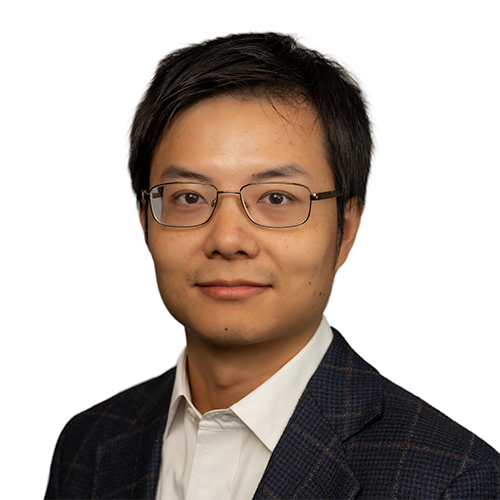
Congratulations to NC State ECE Assistant Professors Amay Bandodkar, Yuan Liu and Vijay Shah on being named 2025-26 Goodnight Early Career Innovators! The program recognizes and rewards up and coming faculty in STEM or STEM education. Each of the 25 awardees will receive $22,000 for each of the next three years to support their research and scholarship endeavors. Learn more from each of the awardees:
Amay Bandodkar
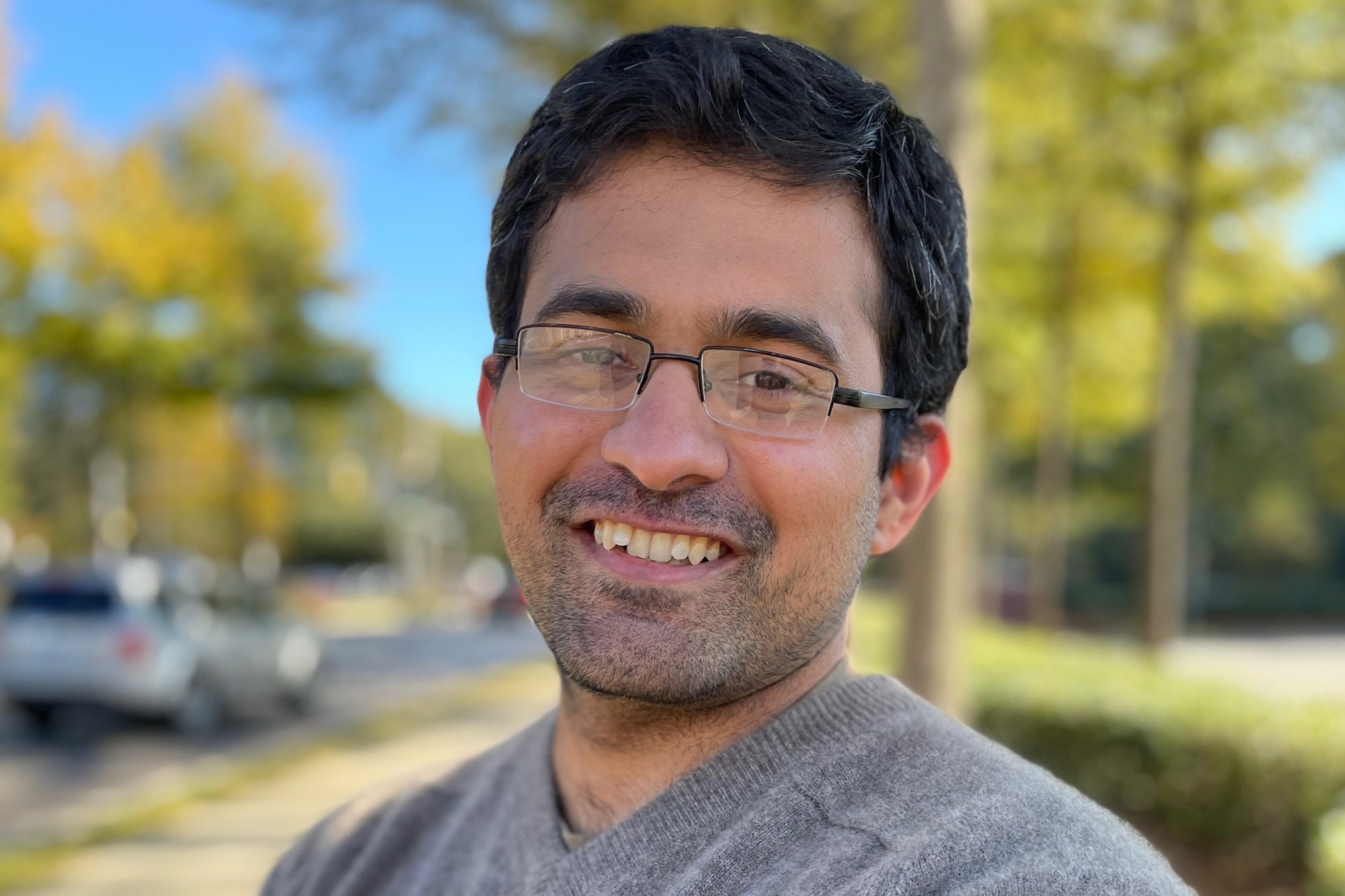
While getting my Ph.D. at UC San Diego, my research focused on the development of new classes of wearable electrochemical sensors and energy harvesters. I later expanded this scope during my postdoctoral fellowship at Northwestern University, pivoting toward high-impact applications like self-powered wearable sensors, brain-implantable neurochemical sensors and eco-friendly, non-toxic batteries. As a faculty member at NC State, my research sits at the intersection of personalized diagnostics, regenerative medicine and sustainable energy. I am driven by the potential of these technologies to solve immediate societal challenges, transforming how we monitor our health and how we power the future.
Our lab’s philosophy is rooted in finding simple engineering solutions to complex, real-life problems in the field of diagnostics, therapeutics and energy. My lab members have training in electrical, biomedical, mechanical and materials engineering, and we tap into this vast and varied expertise to design innovative solutions. We have used an interdisciplinary approach to develop:
- Advanced wearable sweat sensors that non-invasively monitor a person’s well-being by measuring chemicals in their sweat
- Wearable wound monitors that detect chronic wounds early on, well before visual signs show
- Easy-to-use bandages that generate mild currents to heal wounds faster, and
- Non-toxic batteries with performance comparable to legacy batteries
“Receiving this award is an incredible honor and a testament to the hard work and creativity of my entire research team. As a young faculty member, such recognition from the university is both humbling and highly motivating. This grant will be instrumental in allowing us to explore new, exciting fields such as robotics, sustainable farming technology, and intelligent biomedical devices, ensuring our lab remains at the cutting edge of transformative research.”
Yuan Liu
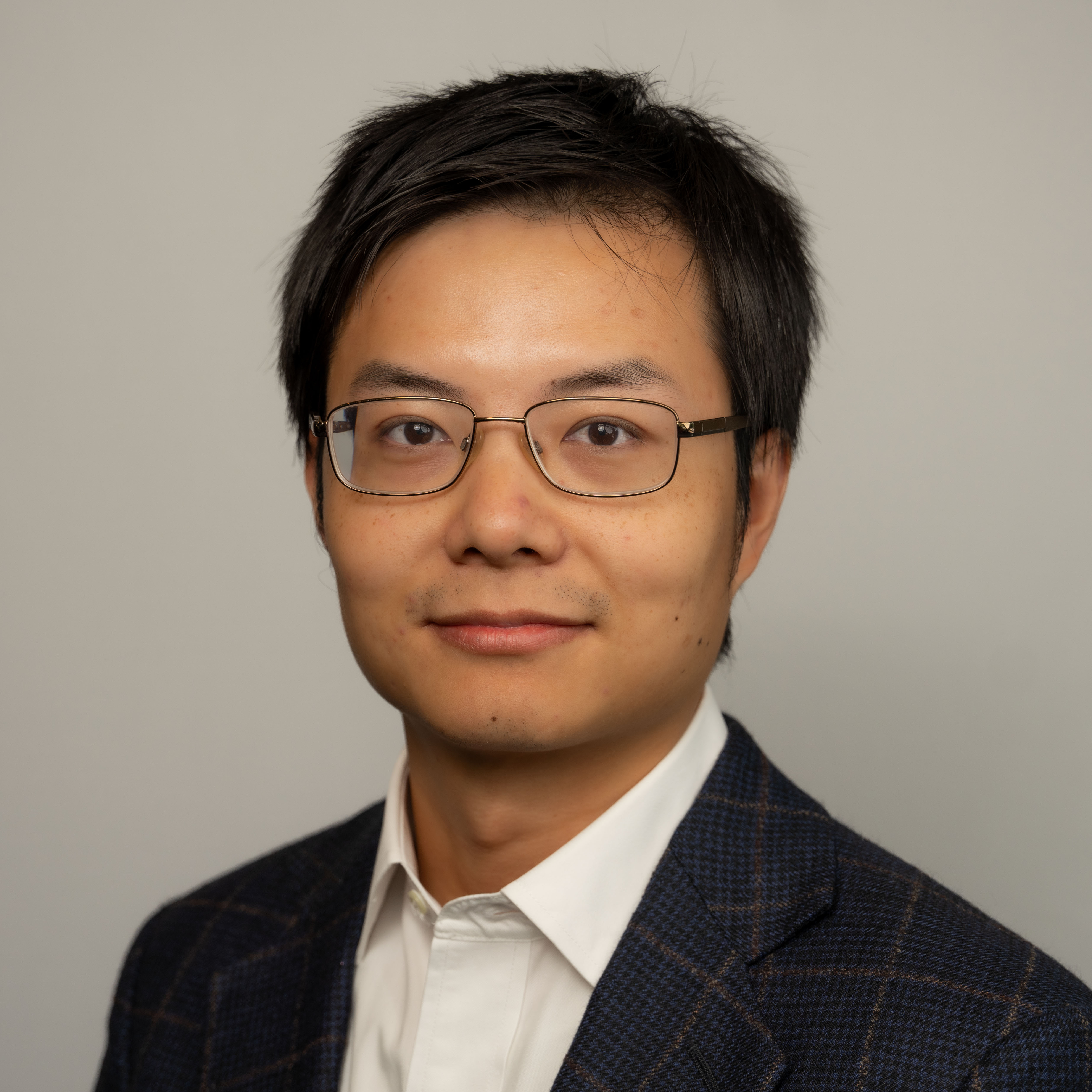
My work sits at the intersection of physics, engineering, computer science and chemistry. What has always drawn me to research is the chance to rethink assumptions that feel “locked in,” especially in areas where the community has been moving forward along a familiar track for decades. Quantum computing is a perfect example; it’s one of the most exciting frontiers in modern STEM, but it’s also a field where the default models we teach and build around can sometimes limit what we imagine is possible.
Most quantum computing efforts focus on qubits – two-level systems and “discrete-variable” (DV) approaches. But nature is full of continuous-variable (CV) systems – bosonic modes such as molecular vibrations, phonons in materials and photons in optics. These systems are everywhere, and they offer unique physical advantages, yet we still don’t fully understand how to control them in ways that unlock their full computational power. That gap is what motivates my research: how do we build quantum computing frameworks that make continuous-variable systems not just usable, but truly powerful?
What I find especially meaningful is that this line of work is not just about theory or devices alone – it requires a system mindset. If we want quantum computing to become a scalable, practical technology, we need ideas that connect fundamental physics to algorithms, protocols, architectures and real implementations. That challenge is what keeps my research exciting; it’s a chance to build new tools from the ground up and help shape what future quantum computers can look like.
At the Quantum Engineering and Simulation Theory (QUEST) Lab at NC State, we work to push the frontiers of quantum information science and its transformative impact across science and engineering. Our research spans three connected directions: quantum algorithms and simulation, hybrid continuous-discrete-variable (CV-DV) quantum computing, and quantum engineering. Together, these efforts aim to advance both the foundational science and the practical pathways needed to realize useful quantum technologies.
One major focus of my work is developing new approaches to hybrid quantum computing, which integrates qubits with continuous-variable bosonic modes such as photons in optics, molecular vibrations and phonons in materials. While most current quantum computing platforms are designed primarily around qubits, bosonic modes are ubiquitous in nature and offer powerful capabilities if we can control them effectively. My group develops full-stack theories, algorithms, protocols and architectures to manipulate multiple bosonic modes and qubits simultaneously – broadening the design space for quantum computers and potentially reshaping how future systems are built.
In parallel, we develop quantum algorithms and simulation techniques that can help model complex physical and chemical systems that are difficult to study with classical computing alone. This includes advancing quantum methods for scientific discovery and building algorithmic tools that connect quantum advantage to real-world problems in physics, chemistry and engineering.
Finally, our quantum engineering efforts focus on building scalable, robust and error-resilient approaches to quantum computation, including directions such as quantum signal processing and hardware-aware strategies for improving performance in realistic devices. Across all three areas, our goal is to contribute innovations that accelerate progress in STEM—both by expanding the capabilities of quantum computing and by training students to work across disciplines where the next breakthroughs will happen.
“I’m honored to receive the Goodnight Early Career Innovator Award. This award is especially meaningful early in my career because the support helps accelerate our effort to rethink quantum computing beyond qubits, while creating more opportunities for students to contribute to high-impact, interdisciplinary research.”
Vijay Shah

My research focuses on next-generation wireless communication and networking, including 5G/6G systems, Open Radio Access Networks (O-RAN) and AI-native network architectures. Wireless networks are the invisible infrastructure underlying nearly every aspect of modern life, yet their core designs remain largely rigid and vendor-centric, limiting their ability to scale, adapt and support emerging data-intensive and latency-sensitive applications. I am motivated by the opportunity to fundamentally rethink how telecom networks are built, shifting from proprietary, static infrastructures to open, intelligent and adaptive systems.
Working at the intersection of artificial intelligence and wireless systems, my research aims to create networks that can sense, learn and respond to real-time conditions across multiple layers of the protocol stack. My group at the NextG Wireless Lab@NC State works across three tightly connected directions: 5G/6G system design, O-RAN architectures and AI–driven network control and automation. Together, these efforts seek to transform wireless systems from static pipelines into data-driven platforms capable of supporting AI-native services and future 6G applications.
A defining feature of my work is a full-stack, system-level perspective that connects algorithms, protocols, architectures and deployment realities. This approach enables research that is both theoretically grounded and practically deployable, addressing challenges such as real-time control, scalability, reliability and interoperability in heterogeneous networks. In parallel with academic research, I translate ideas into practice through my startups, WiSights Lab and NeuralSmith, helping transition from laboratory prototypes to real-world deployments.
Overall, my goal is to help shape the foundations of future wireless networks that can support transformative applications in healthcare, transportation, industry and immersive communications, while also advancing more efficient and equitable global connectivity.
“Receiving the 2025–26 Goodnight Early Career Innovator Award is a tremendous honor and a powerful source of motivation. As an early-career faculty member, this recognition affirms the importance of pursuing bold, high-risk ideas to rethink how telecom networks are designed and operated. The award will provide critical support to accelerate my research on AI-native and open wireless networks, helping translate fundamental research into deployable technologies with real-world impact.”